

How to Save Money on Aircon Prices in Singapore
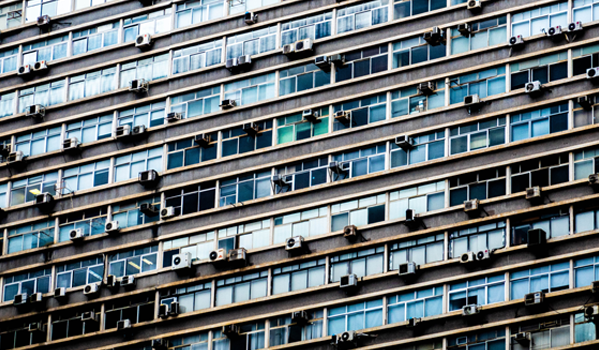
Choosing and buying the right air conditioning (aircon) unit in Singapore can save you big money on your monthly utilities bills.
With Singapore’s hot and humid weather, some would argue that air conditioning at home is a necessity. These days, the cost of installing an aircon has decreased, but you can always get a better deal and save money on your monthly utility bills. Here’s a quick guide on how to save money on aircon prices in Singapore:
1. Compare aircon prices from different brands
Home contractors often receive a commission from selling a particular brand. This is as true for some brands of furniture as it is for air-conditioning. This isn’t always bad: just because they get a commission, it doesn’t mean the contractor is just out for your money (their reputation is also at stake).
Nonetheless, it pays to look around. Don’t just take the contractor’s recommendation at face value — visit different distributors, and see if there are cheaper options on aircon prices in Singapore.
Also remember that not all contractors are equally fair – some may choose to recommend a brand for which they receive a higher commission.
2. Match the BTU rating to the room size
Air conditioners come with a British Thermal Unit (BTU) rating. The larger the size of the room, the higher the BTU of the air-conditioner should be.
Small rooms (150 square feet or below) will require a unit with around 6,000 BTUs. This is generally appropriate for a single bedroom. For larger rooms (up to 350 square feet), you will need a unit with around 9,000 BTUs. This is typical for most living rooms.
Very large rooms (500 square feet or above) will require something between 10,000 to 15,000 BTUs.
If you use a powerful air-conditioner in a small room (e.g. 14,000 BTUs for a 150 square foot bedroom), it will cool the room much faster. But the temperature will fall much faster than the humidity levels, causing the walls to feel damp, and it can damage wallpaper or warp wooden floors over time.
If you use an underpowered air-conditioner, you will run up higher bills by having to set the air-conditioner on full power, for a longer time. You will also wear out the unit faster.
If you intend to install air conditioning in a kitchen, increase the required BTU by 4,000. Note that it is not advisable to install air conditioning in a kitchen – this will trap smells, and the unit will require more constant servicing.
Of course, the higher the BTU the more expensive the unit tends to be. So match the BTU of the unit to the room size, in order to save cost on air con prices.
3. Don’t bother using silenced units for large rooms
Some air-conditioners are more expensive because you don’t hear the signature “drone” when it’s switched on.
This is only a feature worth paying for if you are air-conditioning a small bedroom. For master bedrooms (200 square feet or more) or living rooms, the silent running is irrelevant. In large spaces, you will probably not notice the sound anyway.
4. Match your usage to the right energy efficiency
The air-conditioner’s Energy Efficiency Rating (EER) measures how efficiently it uses electricity. The base number is 10 — this is a legal requirement.
For every point above 10, the power cost will be about 10 per cent lower over a month of use. This translates to lower electricity bills, but often a higher initial cost. Is it worth the trade-off?
That depends on how often you use the air-conditioner.
If you only turn on the air-conditioner two or three times a week, you are not likely to see much savings from a higher EER. You might be able to save on cost by getting a cheaper, less efficient unit.
If you use the air-conditioner every night however, you will probably save more with an efficient unit in the long run.
Alternatively, you may want a higher EER to be more eco-friendly.
5. Get an extended warranty for bedroom units
If you will use the air conditioner every night, it’s a good idea to buy the extended warranty. This normally costs under S$200. A leaking air-conditioner can cost you almost that much to fix anyway, and a damaged compressor can run up costs of around S$600.
You may want to skip extended warranties on living room units if you use them less frequently (and can live without them if they spoil).
Note that the warranty is almost always from the seller, not the manufacturer. So if the seller closes shop, you may be left in the lurch. Get extended warranties only from proven companies.
6. Use the right credit card to buy aircon units
Buying an aircon unit costs several thousand dollars at least, so use the right cashback or rewards credit card to earn cashback, rewards or air miles.
Source: https://www.singsaver.com.sg/blog/choose-an-air-con-in-singapore-and-save-money